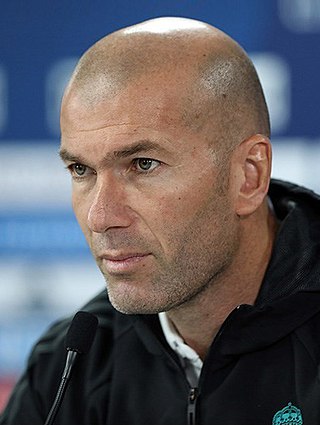
Zinedine Yazid Zidane was born on June 23, 1972, in the La Castellane neighbourhood of Marseille — a rough, high-rise housing estate on the northern periphery of the city, populated largely by immigrants from North Africa. His parents had come from the Kabyle Berber region of Algeria, and the family shared the cramped aspirations of every working immigrant household. The young Zinedine, known as Yazid to his family, found his medium in football on the concrete pitches of La Castellane, where the game was played with a physical intensity that demanded quick feet and quicker thinking. He was not the fastest or the strongest child on those courts, but he had an uncanny ability to control the ball in confined spaces and to distribute it to teammates whose positions he seemed to divine before they knew their own intentions.
He joined Cannes as a teenager and made his professional debut in 1989. His talent was evident immediately but developed methodically; he moved to Bordeaux in 1992, where he blossomed into a commanding central midfielder under Rolland Courbis, leading the club to the UEFA Cup final in 1996. That summer, Juventus paid a then-enormous fee to take him to Turin, where he won back-to-back Serie A titles in 1997 and 1998 and reached two Champions League finals. At Juventus he became the most complete midfielder in the world — a player who combined the physical presence of a defensive midfielder with the creative imagination of an attacking one, and who could turn the course of a match with a single touch of his left foot.
The 1998 FIFA World Cup, hosted by France, was his coronation. In the final against Brazil — the defending champions, the overwhelming favourites — Zidane scored two headers from corners in the first half. The stadium at Saint-Denis fell silent as the most technically gifted international team in the world was dismantled by the sheer authority of a bald midfielder from Marseille. France won 3–0. The country erupted. Zidane's face was projected onto the Arc de Triomphe. He was awarded the Ballon d'Or that year, and again in 2000 after France won the European Championship in Belgium, and a third time in 2003 after his extraordinary volley in the Champions League final against Bayer Leverkusen — a shot of such geometrical perfection that it seems more like a conjuring trick than an athletic act.
His move to Real Madrid in 2001 for a world-record fee of £46 million was the logical culmination of his standing. In Madrid he played alongside Ronaldo R9, Roberto Carlos, Raúl and Luis Figo in a team assembled purely from aesthetics — the so-called Galácticos, a squad of artists purchased without apparent regard for positional balance. It should not have worked, and often did not, but when it did — particularly in that Champions League final at Hampden Park — it was the most beautiful football of the modern era.
His farewell to the game was characteristically complicated. The 2006 World Cup final against Italy would be his last match as a professional. France needed him: at thirty-four, grey and arthritic around the knees, he was still the most important player on the pitch. He scored a Panenka penalty in the first half of the finest World Cup final in thirty years. Then, in extra time, after an exchange with the Italian defender Marco Materazzi — words that Zidane has never fully repeated in public, though their nature was recorded — he turned and delivered a head-butt into Materazzi's chest that remains the most-discussed single moment in the history of the sport. He walked off the field past the World Cup trophy without looking at it, and retired from football that night. France lost the final on penalties.
He returned as a manager, and what he did in his second act was equally remarkable. As Real Madrid head coach between 2016 and 2018, he won three consecutive UEFA Champions Leagues — a feat no manager had achieved in the competition's history. The coaching record did not diminish the player. It confirmed what those who had watched him always suspected: that his understanding of football was architectural, spatial and profound. Zidane saw the game differently from other players, and he was rewarded for it differently. He remains, to anyone who watched him play, the supreme argument for football as an art form rather than a competition.
"I always wanted to be a footballer. It's the only thing I ever dreamed about."— Zinedine Zidane
"When I was on the pitch, time slowed down for me. I could see everything."— Zinedine Zidane
| Player | Career Goals | Ballon d'Or | World Cups |
|---|---|---|---|
| 🇧🇷 Pelé | 1,000+ | 1 (honorary) | 3 |
| 🇦🇷 Maradona | 345 | 1 | 1 |
| 🇫🇷 Zidane | 125 | 3 | 1 |
| 🇧🇷 Ronaldo R9 | 414 | 2 | 2 |
| 🇦🇷 Messi | 850+ | 8 | 1 |
| 🇵🇹 C. Ronaldo | 900+ | 5 | 0 |