🇩🇰
Science · Atomic Physics
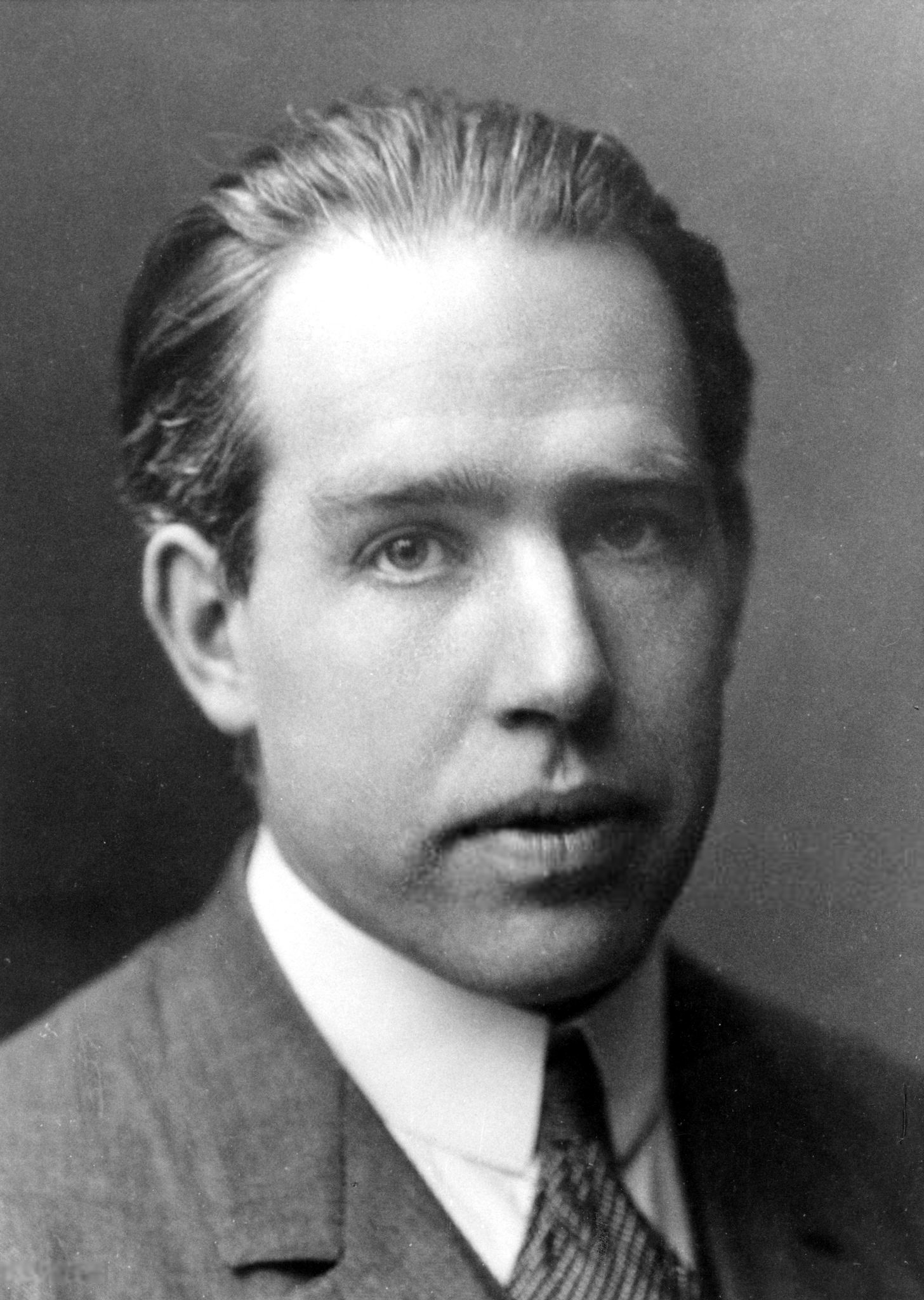
Niels Bohr
Decoded the atom's structure — architect of quantum mechanics
When Niels Henrik David Bohr arrived in Cambridge in 1911 as a young Danish postdoctoral student, he politely but bluntly told J.J. Thomson — discoverer of the electron — that his atomic model was wrong. It was a characteristically Bohrian act: intellectually fearless, diplomatically eccentric, and entirely correct. Over the next fifty years, Bohr would reshape the landscape of physics more thoroughly than any scientist of his generation, building the first workable quantum model of the atom, establishing Copenhagen as the world capital of theoretical physics, and leaving behind a philosophical interpretation of quantum mechanics that physicists still debate a century later.
Bohr was born on October 7, 1885, in Copenhagen, into a distinguished Danish family. His father, Christian Bohr, was a professor of physiology; his mother, Ellen Adler, came from a wealthy Jewish banking family. The household was intellectually alive, and Niels — along with his brother Harald, who would become a celebrated mathematician — absorbed a love of rigorous thought from childhood. Bohr excelled at the University of Copenhagen, earning his doctorate in 1911 with a dissertation on the electron theory of metals, and then set off for England to work with the era's greatest experimentalists.
After a productive but relationally awkward stint at Cambridge, Bohr moved to Manchester to work with Ernest Rutherford. Rutherford had just proposed, in 1911, that the atom consists of a tiny, dense, positively charged nucleus orbited by electrons — but this model had a fatal flaw: according to classical electromagnetism, orbiting electrons should continuously radiate energy and spiral into the nucleus within a fraction of a second. All matter should collapse almost instantly. Clearly, it did not.
Bohr solved this problem in 1913 with a radical proposal: electrons do not occupy arbitrary orbits but move only in specific, quantized shells defined by Planck's constant. As long as an electron stays in one of these allowed orbits, it does not radiate. It releases energy — in the form of a photon of specific frequency — only when it jumps from a higher orbit to a lower one. This "quantum jump" perfectly explained the discrete spectral lines of hydrogen gas that had puzzled spectroscopists for decades. For the first time, atomic structure and atomic spectra were connected by a coherent theoretical framework.
The Bohr model was not the final word — quantum mechanics would later replace it with a far more sophisticated wave-mechanical description — but it was the essential bridge between Planck's quantum hypothesis and the full quantum theory of the atom. It gave physicists a working map of atomic structure and inspired a generation of researchers. Bohr received the Nobel Prize in Physics in 1922 for this work.
In 1920, Bohr founded the Institute for Theoretical Physics in Copenhagen (now the Niels Bohr Institute). It became the most important intellectual crossroads in physics during the 1920s and 1930s, hosting virtually every major figure of the quantum revolution: Heisenberg, Pauli, Dirac, Schrödinger, Born, and many others. The "Copenhagen interpretation" of quantum mechanics — the probabilistic, observer-dependent framework that emerged from debates at the institute — remains the dominant orthodox interpretation of quantum theory, though it has never ceased to generate controversy.
Bohr's famous debates with Einstein over the nature of quantum reality are among the most celebrated in the history of science. Einstein, who never accepted the fundamental indeterminism of quantum mechanics, repeatedly challenged Bohr with thought experiments designed to show that the theory was incomplete. Bohr's rebuttals — careful, painstaking, often delivered after sleepless nights of reflection — persuaded the physics community that quantum mechanics was consistent. The dialogue between these two giants elevated the epistemological stakes of physics to a philosophical level rarely reached in science.
When the Nazis occupied Denmark in 1940, Bohr — Jewish on his mother's side — continued to work until 1943, when he received word that he was about to be arrested. He escaped by boat to Sweden and was subsequently airlifted to Britain in the bomb bay of a Mosquito aircraft. He joined the Manhattan Project under the alias Nicholas Baker, contributing to the technical work but spending much of his energy urging political leaders, including Churchill and Roosevelt, to consider international oversight of atomic weapons. They did not listen. After the war, he returned to Copenhagen and spent his remaining years advocating for the peaceful use of atomic energy. He died there on November 18, 1962.
| Born | October 7, 1885, Copenhagen, Denmark |
| Died | November 18, 1962 (aged 77), Copenhagen, Denmark |
| Field | Atomic physics, quantum mechanics, theoretical physics |
| Key Work | Bohr model of the atom (1913); Copenhagen interpretation |
| Nobel Prize | Physics, 1922 |
| Institution | Niels Bohr Institute, Copenhagen (founded 1920) |
| Manhattan Project | Participant (as "Nicholas Baker"), 1943–1945 |
| Famous Debate | Bohr–Einstein debates on quantum mechanics, 1927–1935 |
| Scientist | Key Contribution | Nobel Prize |
|---|---|---|
| Niels Bohr | Quantum atom model; Copenhagen interpretation | 1922 |
| Max Planck | Energy quantization; Planck's constant | 1918 |
| Werner Heisenberg | Uncertainty principle; matrix mechanics | 1932 |
| Erwin Schrödinger | Wave mechanics; wave function | 1933 |
The Bohr model of the atom, though superseded in technical detail, remains the intuitive picture taught to every physics and chemistry student in the world. More deeply, the Copenhagen interpretation that Bohr championed established the probabilistic, measurement-based framework that underpins all practical applications of quantum mechanics — from semiconductor physics to quantum computing.
Bohr also matters as an institution builder and a conscience of science. His institute in Copenhagen was a model for how theoretical physics could be done as a collaborative, international, intellectually open enterprise. And his post-war advocacy for open atomic science, though unsuccessful in his lifetime, anticipated the debates about nuclear proliferation and scientific responsibility that remain urgent today.